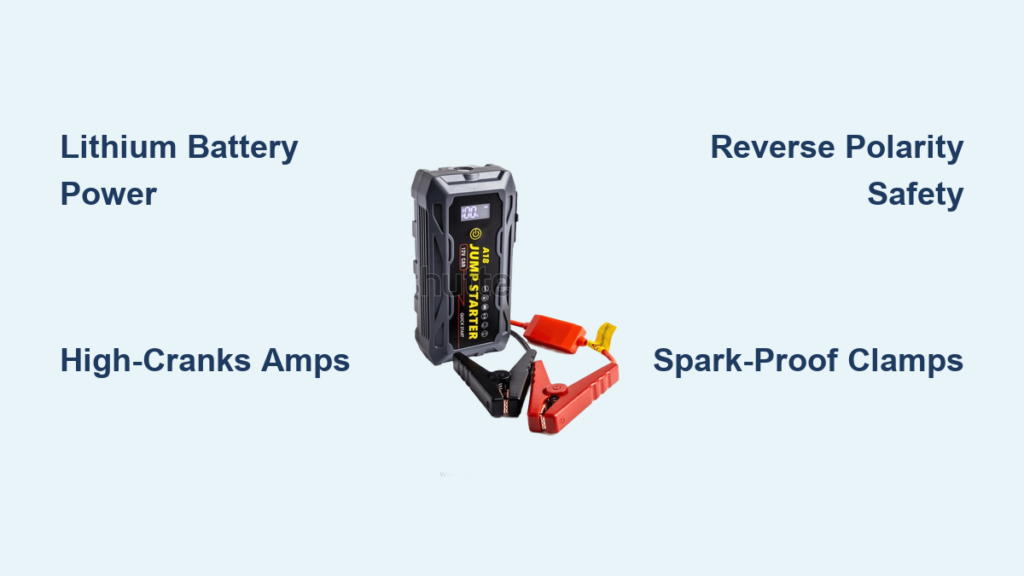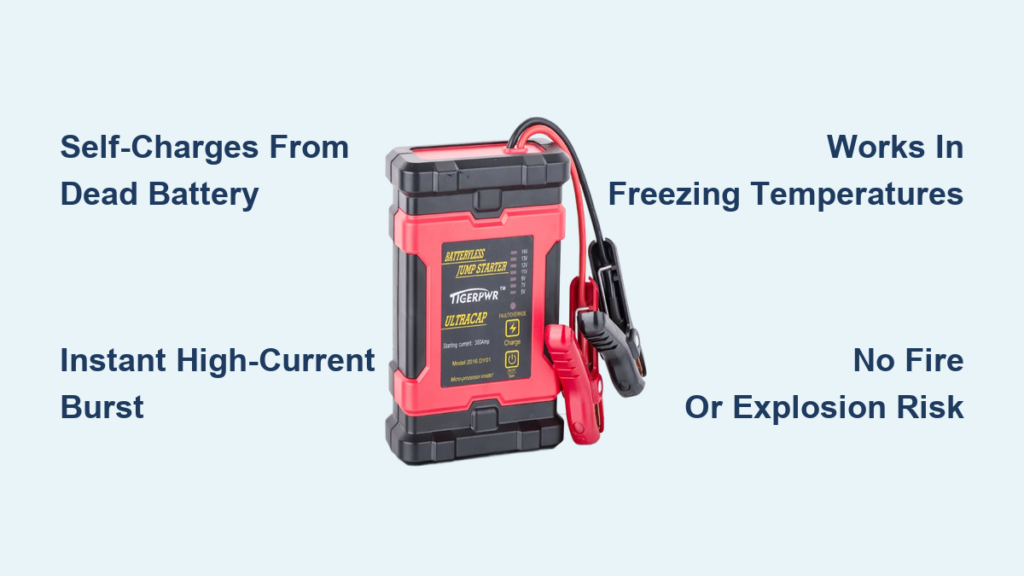
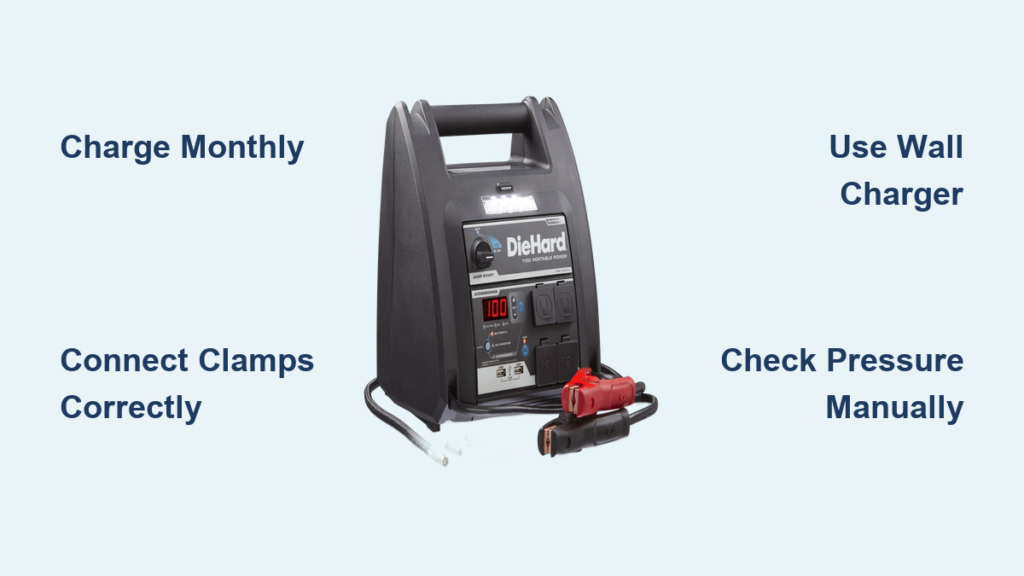
A dead battery on a cold morning. A flat tire in a parking lot. A phone dying with no outlet in sight. The DieHard 1150 Portable Power Battery handles all three, and knowing how to use DieHard jump starter functions properly turns panic into control.
This compact unit jump-starts vehicles, inflates tires, and powers small devices. This guide walks you through each function step by step, plus charging, maintenance, and troubleshooting tips to keep it ready when you need it most.
Jump-Start Your Vehicle Safely
Starting a car with a dead battery is the number one reason people buy this device. The DieHard 1150 handles the job reliably, but only if you connect everything in the right order. Follow the sequence below exactly.
Connect Cables the Right Way
- Turn off the jump starter.
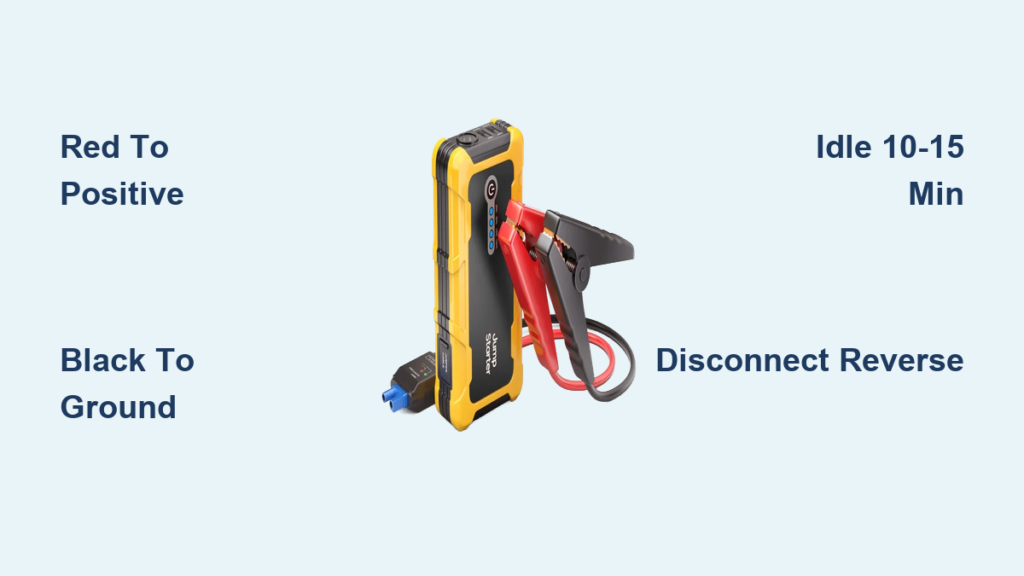
- Attach the red clamp to the battery’s positive (+) terminal.
- Attach the black clamp to the engine block or negative (-) terminal.
- Switch to “Battery Power” mode.
- Turn on the unit.
- Start your vehicle.
If the engine doesn’t turn over, wait 30 seconds and try again.
⚠️ Warning: Always power the unit on after connecting the clamps. Connecting to a powered unit can cause sparks or surges.
What to Do After a Successful Start
• Leave the engine running for at least 15 minutes to recharge the battery.
• Disconnect clamps in reverse order: black first, then red.
• Turn off the jump starter.
• Store the cables securely in the side compartment.
✅ Pro tip: Attach the black clamp to an unpainted metal part of the engine block for safer grounding and fewer sparks.
Inflate Tires and Inflatables Fast
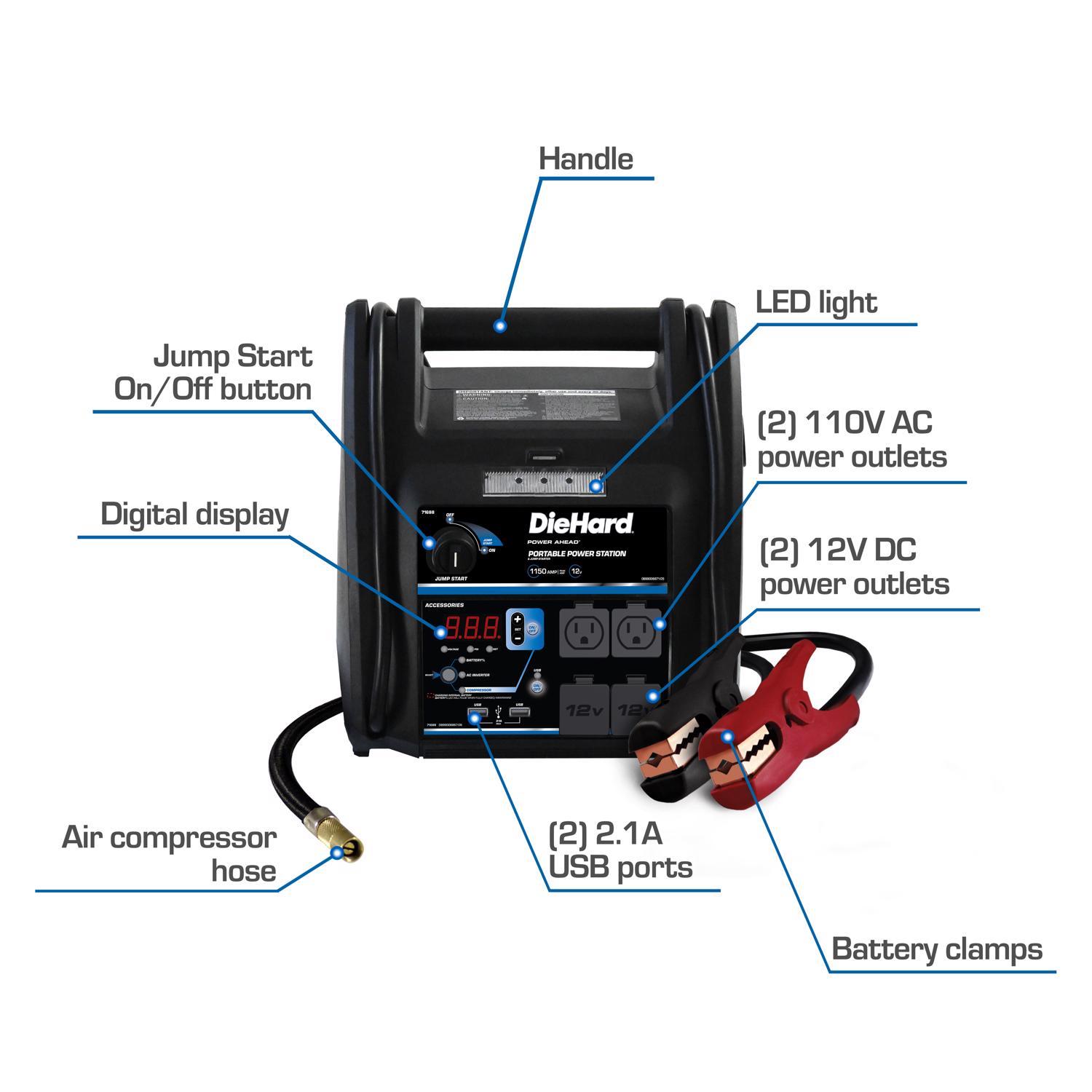
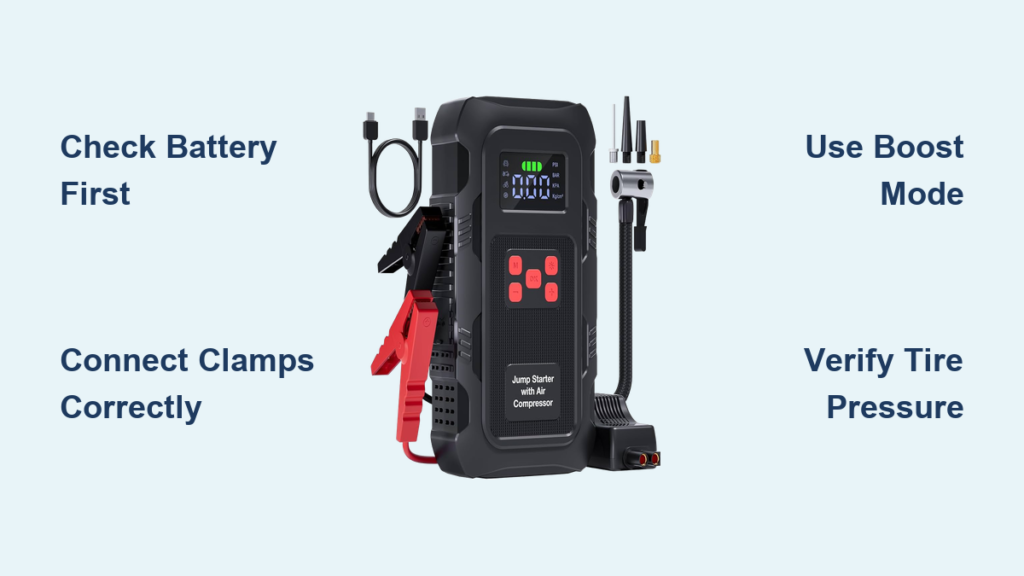
The built-in air compressor replaces a separate pump, saving space in your trunk or van. It works well for bike tires and small inflatables, though it runs loud and slow on larger tires. Set expectations accordingly.
Set Up the Air Hose
- Unroll the hose from the back storage nook.
- Screw on the correct nozzle adapter:
• Standard valve for cars and bikes
• Needle adapter for sports balls
• Wide nozzle for air mattresses - Plug the hose into the 12V compressor port on the front.
- Press and hold the power button to activate.
Monitor Pressure to Avoid Overinflation
• Use a separate tire pressure gauge, since the unit has no built-in PSI display.
• Inflate in short bursts and check pressure between each burst.
• Stop when you reach the recommended PSI listed on the tire sidewall.
⏱️ Time estimate: a few minutes for a bike tire, longer for car tires. The compressor works slowly on high-volume jobs.
Shut Down Properly
• Press and hold the power button to turn off.
• Unscrew the hose and store it with the adapters.
• Wipe dust off the nozzle before storing to prevent clogs.
❌ Don’t run the compressor continuously for long stretches. Let it cool between uses to avoid overheating.
Power Devices Anywhere
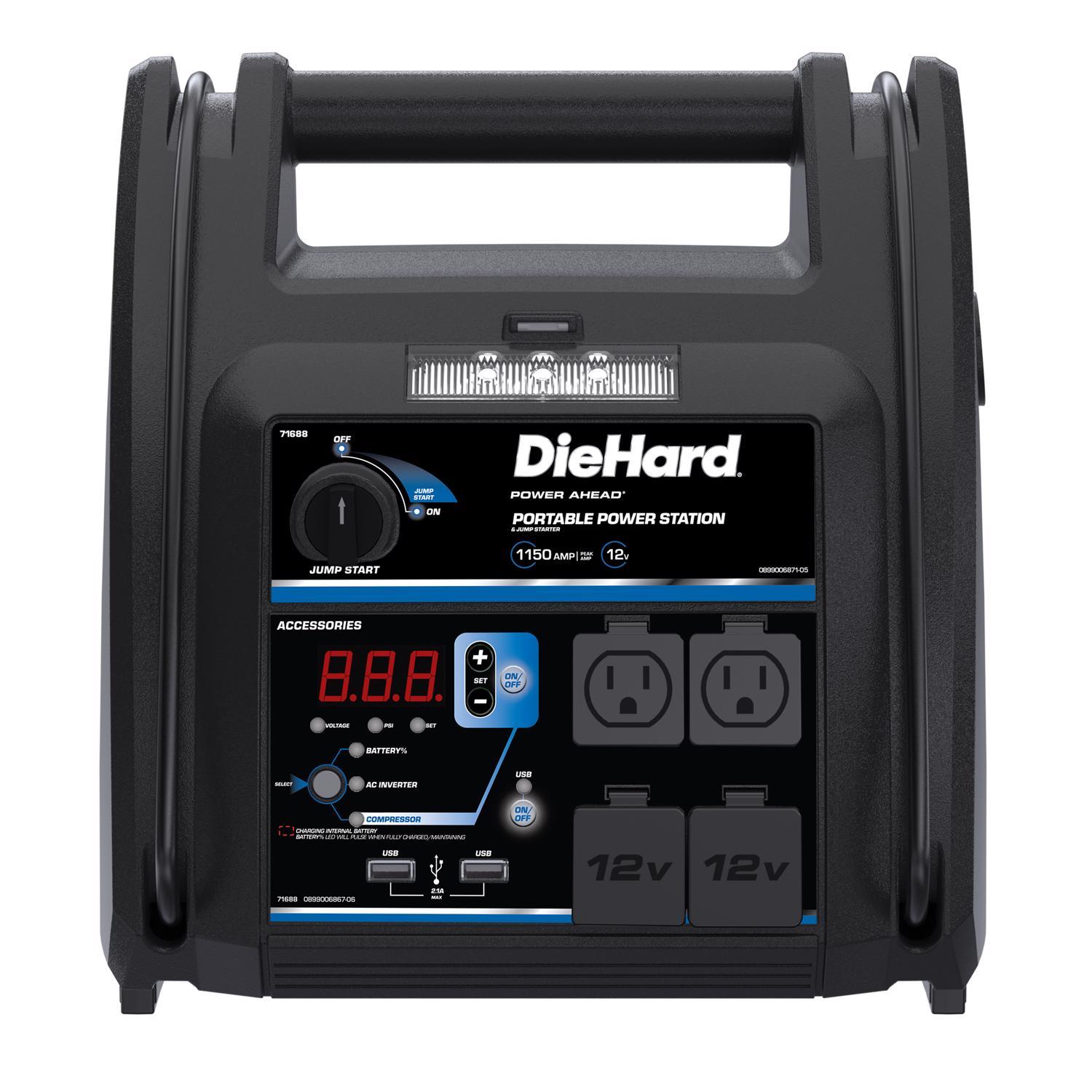
Beyond jump-starting, this unit doubles as a portable power station for small electronics. It offers three output types, each with clear limits.
Charge Phones and Tablets via USB
• Use the dual USB ports for phones, tablets, GPS units, and Bluetooth speakers.
• Plug in a standard USB cable and the device charges automatically.
Run 12V Devices from the Cigarette Lighter Port
• Plug in low-wattage devices such as dash cams or small car accessories.
• Flip the 12V DC output switch if your model has one.
Use the AC Inverter for Standard Plugs
• Flip the AC power switch to “On.”
• Plug in devices using a standard wall cord.
• The inverter supports low-wattage items only.
Safe to use with:
• Laptop chargers
• LED lamps
• Small single-serve appliances
⚠️ Avoid high-draw appliances such as heaters or microwaves. The inverter is not designed for them and will shut down under heavy load.
Charge the DieHard 1150 Properly
A dead jump starter is useless in an emergency. Charging habits matter more with this unit than most, because of one significant design flaw.
Best Method: Wall Outlet Charging
• Use the included AC wall charger with any standard outlet.
• A full charge takes 4 to 6 hours.
• The LED indicator shows progress, turning green when fully charged.
✅ This is the only charging method with visual feedback. Make it your default.
Vehicle Charging: Possible but Unreliable
• Use a 12V car charger adapter (sold separately) in your vehicle’s cigarette lighter port.
• No charge indicator lights up during vehicle charging.
• The manual warns: do not rely on auto-shutdown when charging via vehicle.
⚠️ Critical limitation: You cannot confirm the unit is actually charging. Only use this method if you can verify the charge level later through a wall outlet.
Solar Charging: Impractical for Regular Use
• A compatible 12V solar panel (sold separately) works, but charging is extremely slow.
• Like vehicle charging, there is no indicator to confirm progress.
• Treat this as a backup option only.
Maintain Your Unit for Longevity
The battery self-discharges over time, and a fully drained unit may never recharge again. Simple habits keep it emergency-ready for years.
Recharge Monthly, Even If Unused
• Recharge every 30 days to maintain battery capacity.
• Set a calendar reminder so you never skip it.
• A dead power bank in an emergency is worse than no power at all.
Store It Right
• Keep the unit in a cool, dry place away from moisture and direct sunlight.
• Avoid leaving it in a hot trunk or freezing conditions for long periods.
• Store it where you can reach it quickly, not buried under gear.
Inspect Cables and Clamps Regularly
• Wipe clamps with a dry cloth to remove corrosion.
• Check for frayed wires or cracked insulation.
• Replace damaged cables immediately; never use them.
Troubleshooting Common Issues
Even with careful use, problems happen. These quick fixes resolve the most common complaints.
Jump Starter Won’t Turn On
• Check the charge level by plugging into a wall outlet. No red light means a dead battery.
• Try a different outlet or adapter to rule out the power source.
• Inspect connections for looseness or damage.
Compressor Stops Mid-Inflation
• Overheating protection has likely activated.
• Wait several minutes for the unit to cool before restarting.
• Avoid forcing an immediate restart, which can damage the motor.
USB Port Not Charging a Device
• Swap the USB cable first; faulty cables cause most failures.
• Test the port with a different device.
• Some devices simply draw more power than the port provides.
Final Thoughts on Using Your DieHard Jump Starter
The DieHard 1150 delivers on its core promises: reliable jump-starts, effective tire inflation, and dependable power for small devices. At its budget-friendly price, it replaces two separate tools and earns a spot in any trunk or van.
Remember the three golden rules: charge it monthly through the wall outlet, respect the power limits on the inverter, and verify charge levels whenever you use vehicle or solar charging. Do that, and this unit will be ready every time you need it.
Next step: Charge your unit fully today, test the jump-start function, and set that monthly reminder. An emergency tool only works if you maintain it before the emergency.
Frequently Asked Questions About the DieHard Jump Starter
How long does it take to charge the DieHard 1150?
A full charge through a standard wall outlet takes 4 to 6 hours. Vehicle and solar charging work but take longer and show no charge indicator.
Can it jump-start trucks and SUVs?
Yes. It handles standard cars, trucks, and SUVs with a dead battery. Connect red to positive, black to negative or the engine block, then start the vehicle.
Why won’t the charge light come on in my car?
The unit shows no charge indicator during vehicle or solar charging. This is a known limitation. The manual advises against relying on auto-shutdown, so verify the charge later via wall outlet.
Can I inflate car tires with the built-in compressor?
Yes, but it works slowly and loudly, especially on larger tires. Use a separate pressure gauge, since the unit has no built-in PSI display, and let it cool between uses.
What devices can the AC inverter power?
Low-wattage items like laptop chargers, LED lamps, and small single-serve appliances. High-draw devices such as heaters and microwaves will overload it.
How often should I recharge the jump starter when stored?
Recharge it at least every 30 days. The battery self-discharges over time, and a fully drained battery may not accept a charge again.