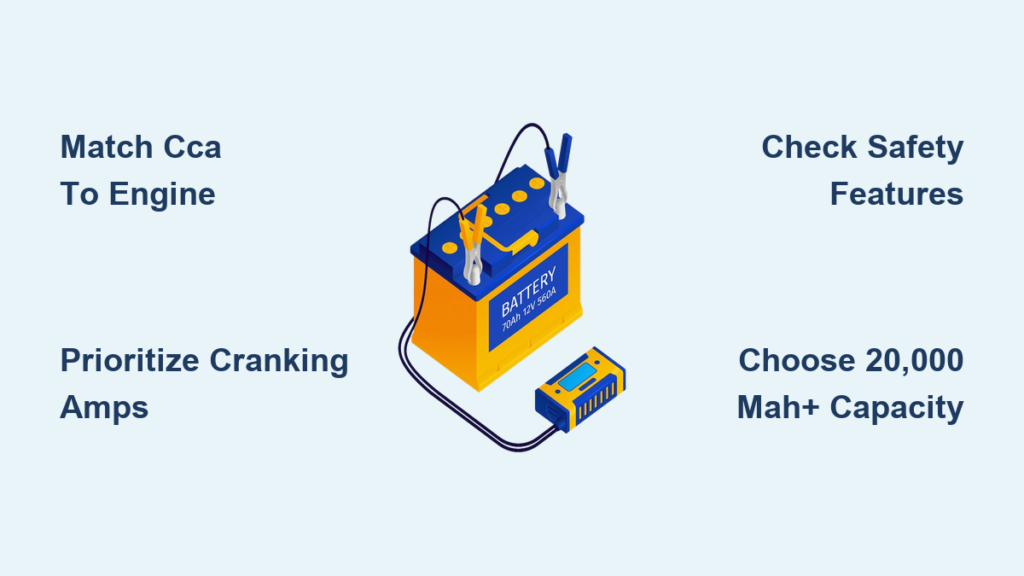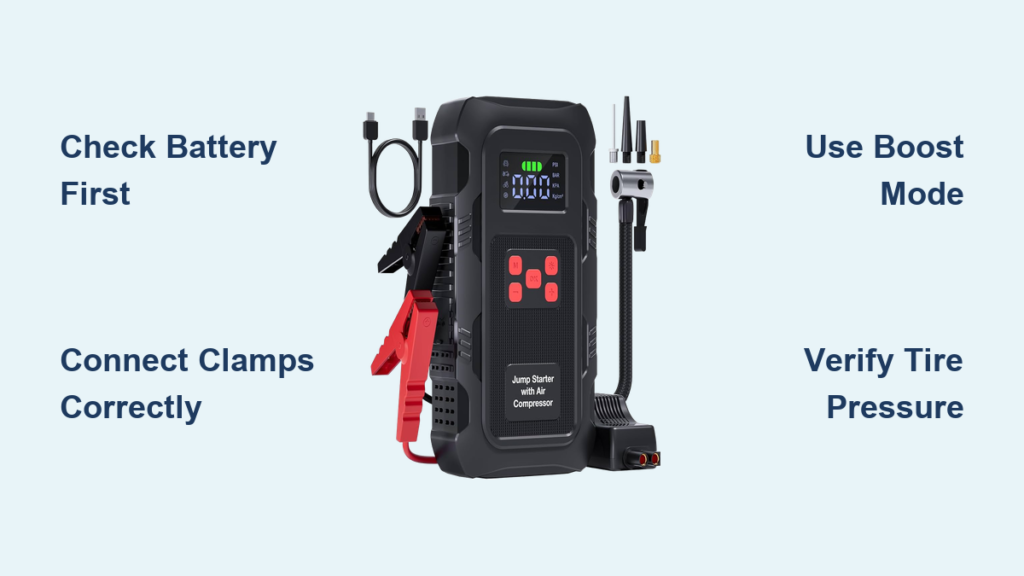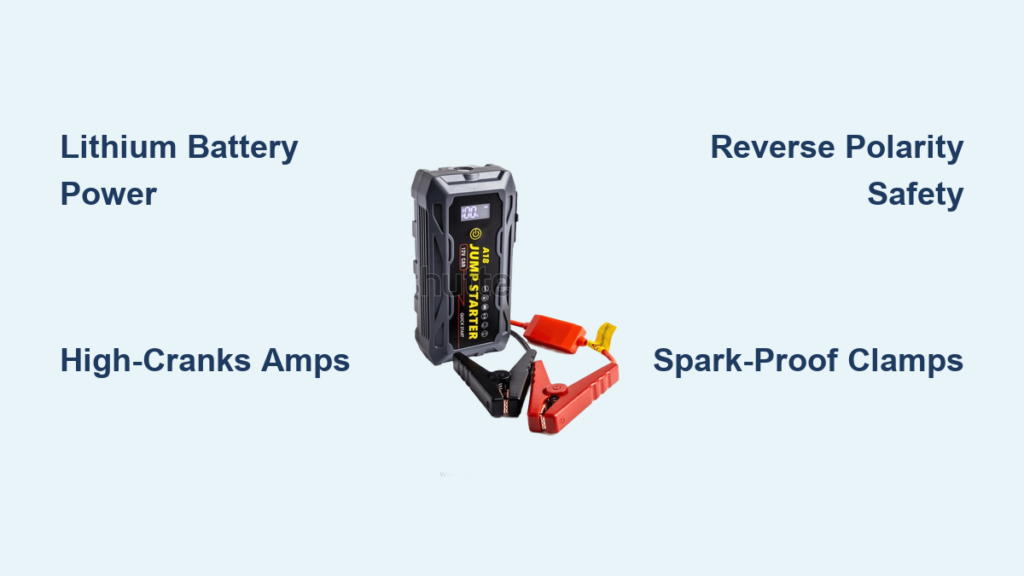
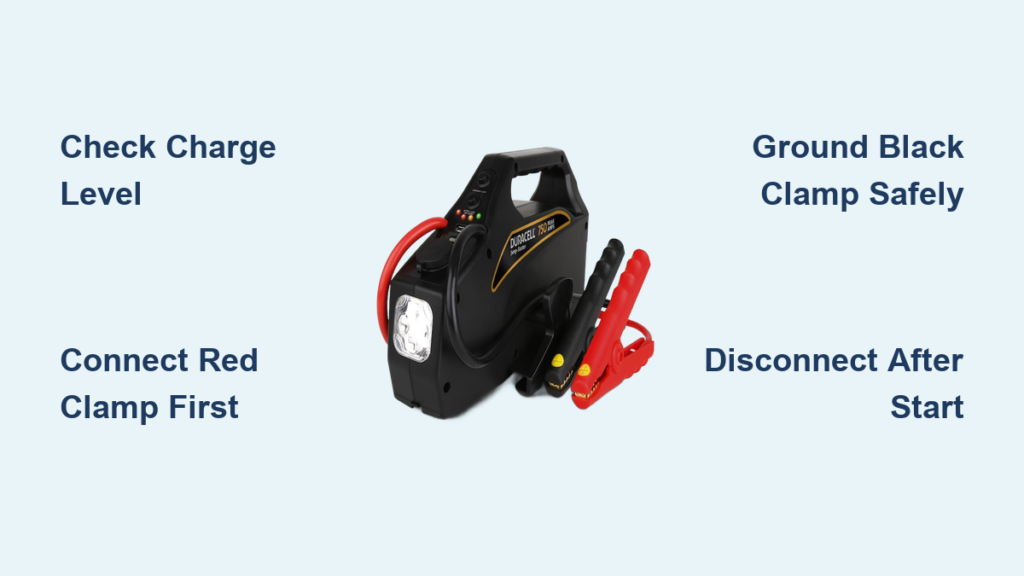
Your car won’t start, there’s no other vehicle around, and you’re stuck. This is exactly when a Duracell jump starter earns its spot in your glovebox. It delivers up to 1,100 peak amps, so you can restart your engine without a donor car.
This guide walks you through the full process of how to use a Duracell jump starter: preparing your vehicle, connecting the clamps safely, starting the engine, and recharging the unit afterward. You’ll also learn troubleshooting tips and maintenance habits that keep the device ready for years.
Prepare Your Vehicle and Jump Starter Before Connecting Anything

Check Your Car Battery and the Unit’s Charge Level
Confirm the battery is actually the problem. A voltmeter reading below 12.2V means the battery is too weak to start the engine. Next, look at the LED indicator on your Duracell unit:
• Solid green: fully charged and ready to jump
• Flashing or red: needs charging first
Never attempt a jump with a low-powered unit. A full charge delivers maximum cranking power.
Park Safely and Shut Everything Off
Park on a level surface, turn off the ignition, and switch off the radio, lights, and AC. Engage the parking brake. Fewer electrical loads means a better chance of a clean start.
Clean Corroded Battery Terminals
White or green crust on the terminals blocks power transfer. Scrub them with a wire brush or a baking soda solution, then wipe them dry. Loose or corroded terminals are one of the most common reasons a jump fails.
Connect the Clamps Correctly to Avoid Sparks and Damage
Attach the Red Clamp to the Positive Terminal
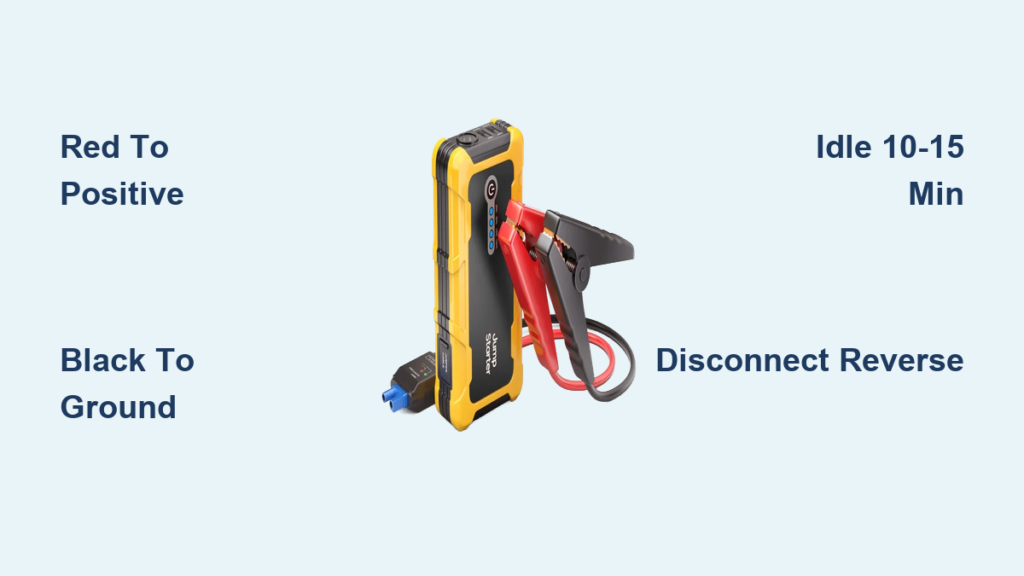
Clip the red (positive) clamp firmly onto the positive (+) terminal of the dead battery. You need solid metal-to-metal contact. Wiggle the clamp to confirm it won’t slip off.
Ground the Black Clamp Away from the Battery
Attach the black (negative) clamp to a bare metal surface away from the battery, such as the engine block or a grounded bolt. Never attach it directly to the negative terminal of a dead battery, since sparks can ignite hydrogen gas. Keep both clamps clear of moving parts and hot engine components.
Wait for the Solid Green Light
Once both clamps are connected, the unit should show a solid green LED, meaning voltage is sufficient. If you see a red light with beeping instead, the connection is wrong. Recheck polarity and clamp placement before going further.
Start the Engine and Avoid Common Cranking Mistakes
Turn Off All Accessories First
Double-check that headlights, phone chargers, and entertainment systems are off. Every draw steals cranking amps from the starter.
Press the Start Button, Then Crank
Hold the power/start button on the jump starter for 1 to 2 seconds. Then turn the key or press your vehicle’s start button. Most engines fire up within 3 to 5 seconds.
If the engine doesn’t start:
- Wait 30 seconds after a 10-second cranking attempt
- Try again
- Stop after three attempts and let everything cool
Prolonged cranking overheats the starter motor and drains the jump starter. Limit yourself to 3 to 5 jump attempts per session.
Disconnect the Unit Right After a Successful Start

Watch for the Beeping and Flashing Green Light
Once the engine runs, you’ll hear a beeping sound with a flashing green light. That’s the reverse charge protection kicking in. The alternator is now charging the battery, and the unit detects current flowing backward. Remove the jump starter immediately to protect it.
Let the Engine Recharge the Battery
Keep the car running for 15 to 20 minutes at minimum. For a full recharge, drive for 30 minutes or more at highway speeds.
Charge Your Duracell Jump Starter the Right Way

Use the Correct Charging Port and Adapter
Most models charge through micro-USB or USB-C. The Jump-Starter 750 uses a 12V DC barrel plug (5.5mm x 2.1mm). If you’ve lost the original cord, any certified adapter meeting these specs works:
• 12V DC output
• Minimum 1A current
• Regulated power supply
Avoid cheap, unregulated chargers. They can damage the lithium-ion battery.
Read the LED Indicators During Charging
• Red light: charging in progress
• Green light: fully charged
After the green light appears, leave it plugged in for 2 to 4 extra hours to fully saturate the battery. Never charge longer than 24 hours unless the manual confirms overcharge protection. Charge overnight before first use, since units ship partially charged.
Respect Temperature Limits
Never charge below 32°F (0°C) or above 104°F (40°C). Extreme heat or cold degrades lithium cells and can make charging unsafe.
Rely on Built-In Safety Features Like SafeJump Protection
SafeJump Technology on the DRLJS1100B
The SafeJump Compact model (DRLJS1100B) includes several protection systems:
• Reverse polarity protection: no damage if clamps are swapped
• Over-temperature shutdown: prevents overheating
• Spark-proof clamps: safe even if they touch each other
• Low-voltage lockout: won’t attempt a start when power is too low
These safeguards make the unit beginner-friendly.
UL2743 Certification and P65 Weather Resistance
The UL2743 certification confirms the device meets third-party safety standards for portable jump starters. The SafeJump model is also dustproof and water-resistant (P65 rated), so it handles rain, mud, and trail dust. Never submerge it.
Troubleshoot When the Jump Starter or Vehicle Doesn’t Respond
No Lights or Power on the Unit
• Plug it in and wait 10 minutes to see if it recovers
• Try a different cable or adapter
• Inspect the unit for physical damage
• Confirm the correct input (12V DC for the Jump-Starter 750)
If it stays unresponsive, contact Duracell support.
Vehicle Still Won’t Start
• Recheck and tighten the clamp connections
• Look for corrosion or acid leakage, which means the battery needs replacement
• Test the alternator, since a failing one won’t hold a charge
• Check for parasitic drain from devices drawing power while the car is off
Persistent problems call for professional diagnostics.
Red Light with Beeping
This signals an incorrect connection. The usual causes are reversed clamps, a poor ground point, or a loose clamp. Disconnect everything, verify polarity, and reconnect.
Use the Extra Features Beyond Jumpstarting
Charge Your Phone and Other Devices
The USB output port powers phones, tablets, GPS units, and cameras. A full battery can charge a phone up to five times, which is handy for camping or emergencies.
Activate the Built-In Flashlight
• Standard mode: bright white light for visibility
• Low mode: longer runtime for extended emergencies
• SOS mode: flashing distress signal
It’s a genuine lifesaver during nighttime breakdowns.
Store and Maintain the Unit So It’s Ready When Needed
Keep It Charged on a Schedule
The battery holds a charge for up to 12 months, but don’t push it. Recharge every 3 to 6 months, top it up before winter, and check the status monthly if it lives in your vehicle. A dead jump starter helps no one.
Store It Properly and Clean the Clamps
Keep the unit in a cool, dry place away from direct sunlight and freezing temperatures. Use the included carrying case to protect it from dust and impact. Wipe the clamps with a dry cloth after each use, and remove any corrosion with a vinegar-soaked rag. Dry them fully before storing.
Know When the Battery Needs Replacement Instead of Another Jump
Warning Signs of a Failing Battery
Frequent dead batteries point to a battery at the end of its life. Watch for:
• Slow cranking
• Needing jump starts weekly
• Visible corrosion or swelling
• A battery older than 3 to 5 years
AutoZone, Walmart, or a local mechanic can test the battery for free. Never attempt to jump a severely damaged or leaking battery. Replace it.
Compare the Jump Starter to Traditional Jumper Cables
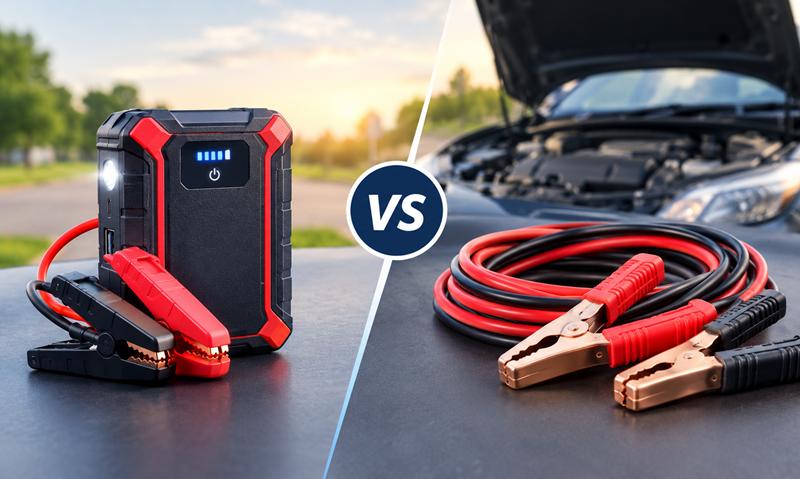
Where the Duracell Unit Wins
• No second vehicle needed
• Fits in a glovebox (the SafeJump model weighs just 704 grams)
• Built-in protections reduce user error
• Works in remote areas where no help is nearby
• Doubles as a phone charger and flashlight
When Cables Are Still the Better Choice
• Jumping multiple vehicles in a row
• Your jump starter is dead or missing
• The battery is severely damaged or leaking (in this case, don’t jump at all)
Follow Safety Best Practices Every Time
Protect Yourself Around the Battery
Wear safety gloves and goggles. Batteries can vent or explode if shorted. Never smoke or use open flames nearby, since hydrogen gas is highly flammable.
Read the Manual Before First Use
Every model differs slightly in buttons and ports. Review the Duracell manual before your first jump, and keep the unit somewhere accessible rather than buried under tools.
Frequently Asked Questions About Using a Duracell Jump Starter
How many jumpstarts can I get on one charge?
Most Duracell models deliver 25 to 40 jumpstarts per charge, depending on the model and conditions. Real-world testing confirmed the 25-start claim is realistic with proper maintenance.
How long does a Duracell jump starter hold its charge?
It retains a charge for up to 12 months. Even so, recharge it every 3 to 6 months and before winter for best results.
Why is my jump starter beeping with a flashing green light?
That’s reverse charge protection. Your engine has started and the alternator is sending current back to the unit. Unplug it right away.
Why is the red light beeping when I connect the clamps?
A red light with beeping means an incorrect connection, usually reversed clamps or a poor ground. Disconnect, verify polarity, and reconnect.
Can I use it on diesel engines?
Yes. The SafeJump Compact model supports petrol engines up to 6 liters and diesel engines up to 3 liters. The 1,100A model handles engines up to 8 cylinders.
What size engines can the 1,100 peak amp model handle?
The 1,100A unit is designed for larger engines up to 8 cylinders, including Jeep V6 engines, trucks, and boats.
Key Takeaways for Using Your Duracell Jump Starter
Learning how to use a Duracell jump starter comes down to three things: verify a solid green light before cranking, ground the black clamp away from the battery, and disconnect promptly once the engine runs. The LED indicators guide you through every stage if you pay attention to them.
Keep the unit charged on a 3-to-6-month schedule, store it in its case away from extreme temperatures, and you can expect 25 to 40 jumpstarts per charge and years of reliable service. Charge it fully tonight if you haven’t already, because the worst time to discover a dead jump starter is the moment you need it most.