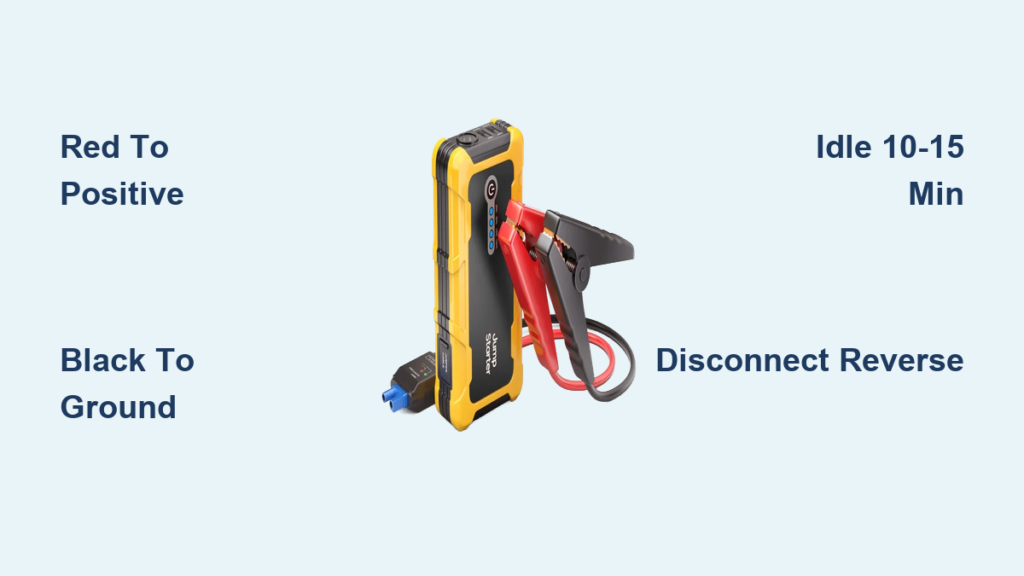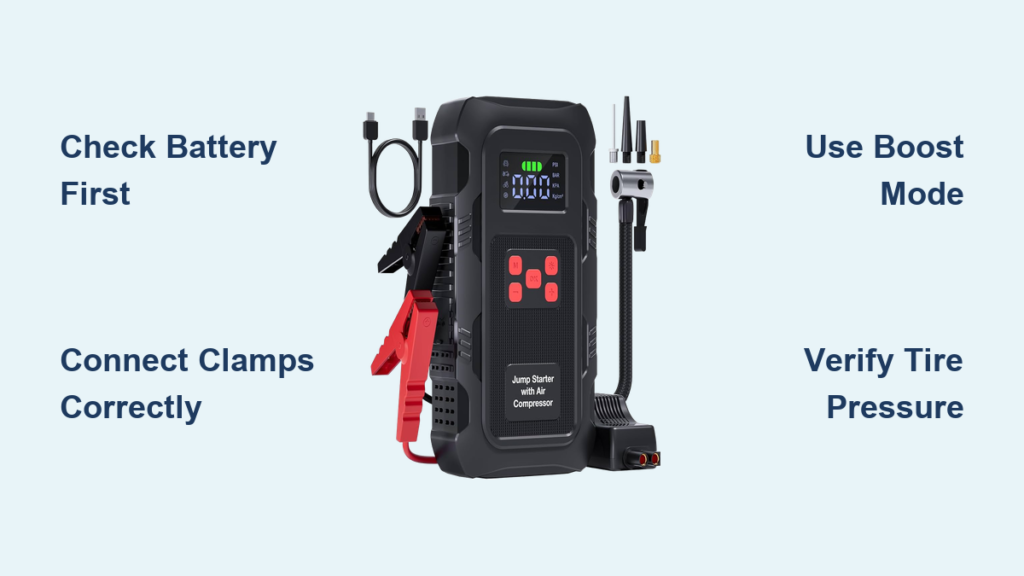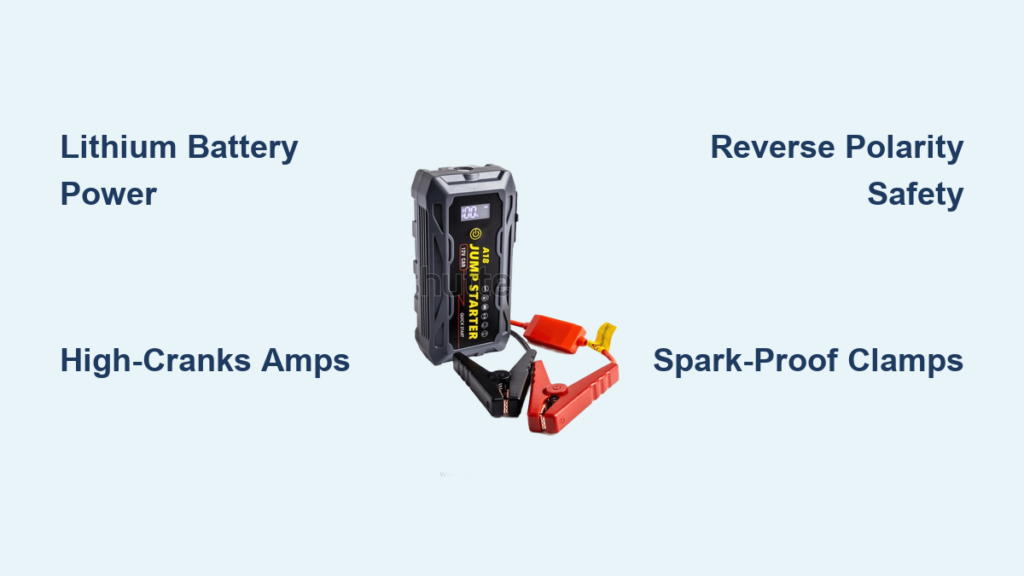
Picture this: you’re running late for work on a cold morning, you turn the key, and nothing happens. A dead battery can strike anywhere, and waiting for roadside assistance isn’t always an option. A quality car battery jump starter lets you get back on the road in minutes without flagging down a stranger or calling a tow truck.
This guide walks you through everything that matters when picking a jump starter. You’ll learn how to match power to your engine, why cranking amps matter more than peak amps, which safety features are non-negotiable, and how to pick a model that fits your driving lifestyle. By the end, you’ll know exactly what to look for before you buy.
Match Jump Starter Power to Your Engine Size
The most important rule when choosing a jump starter is simple: its power output must match your engine. Too little power leaves you stranded, while oversized units waste money and space.
Know Your Vehicle Category
Manufacturers design jump starters for specific engine ranges. Match yours before buying:
• Small vehicles (motorcycles, compact cars, jet skis, ride-on mowers): petrol engines up to 6 liters
• Mid-size vehicles (family sedans, SUVs, 4WDs): petrol up to 7 liters, diesel up to 4.5 liters
• Heavy-duty vehicles (trucks, commercial fleets): petrol up to 8 liters, diesel up to 6 liters
Professional-grade models can jump-start nearly anything on the road, from small cars to monster trucks. For everyday commuting, a mid-range unit does the job comfortably.
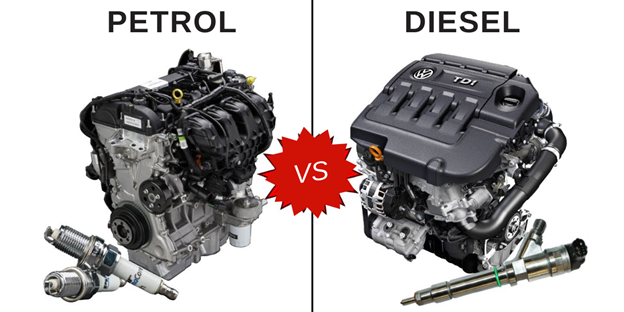
Diesel Engines Demand More Power
Diesel engines need significantly stronger cranking force than petrol equivalents. A 7.3L diesel, for example, requires a high-output unit. Always cross-check the manufacturer’s compatibility list with your engine before purchasing.
Cranking Amps vs. Peak Amps: Which Number Matters?

Power ratings on packaging can be misleading. Knowing the difference between these two metrics protects you from buying an underpowered device.
Cranking Amps Show Real-World Performance
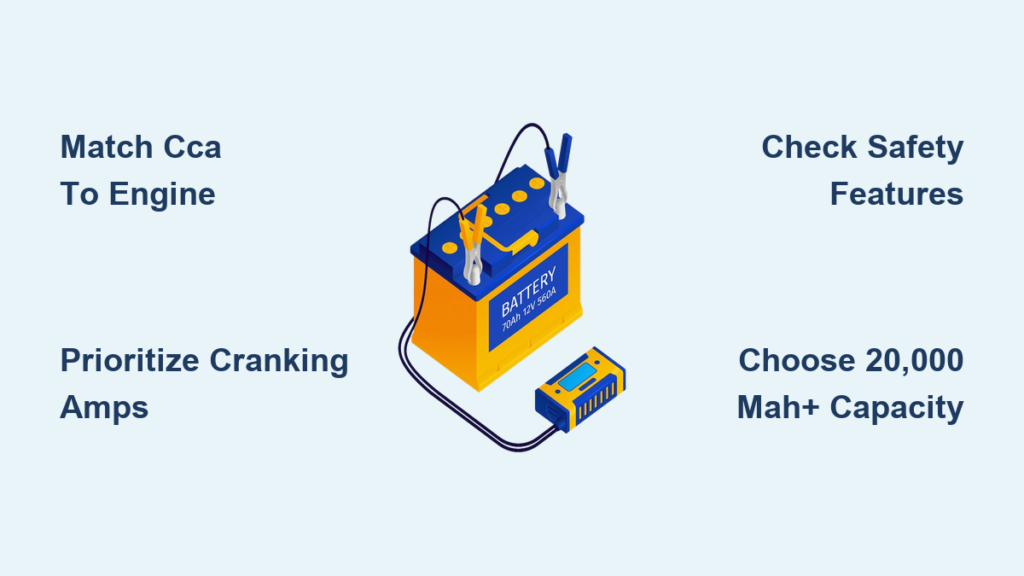
Cranking amps (CA) measure the stable current a device sustains while your engine turns over. This number matters most when an engine needs several attempts to fire, especially in cold conditions. Prioritize higher cranking amp ratings over any other figure on the box.
Why Peak Amps Can Mislead You
Peak amps represent a maximum burst of current lasting only a split second. That output drops sharply with each subsequent starting attempt. A unit advertising 1000 peak amps may struggle on a second try, so never rely on peak figures alone.
Pro Tip: Treat peak amp claims as marketing. Compare cranking amps and CCA when weighing models side by side.
Check Cold Cranking Amps (CCA) for Winter Reliability
Cold weather dramatically increases the current an engine needs to start. That’s why Cold Cranking Amps (CCA) deserve your attention.
What CCA Actually Tells You
• CCA measures amps delivered at 0°F (-18°C) for 30 seconds
• It’s the best indicator of cold-weather starting performance
• Check your car battery’s CCA spec, then pick a jump starter that matches or exceeds it
Recommended CCA Levels
| Vehicle Type | Minimum CCA |
|---|---|
| Standard car | 1000 CCA |
| Trucks and diesels | 2000 CCA or higher |
If you live where winters bite, prioritize CCA over raw capacity. A high-capacity unit with weak CCA will still disappoint on a freezing morning.
Battery Capacity: How Much Reserve Power Do You Need?
Capacity determines how many jump starts you get per charge and how long the unit holds its power in storage.
Understand the Ratings
Capacity is measured in Amp-hours (Ah) or milliamp-hours (mAh). Key benchmarks:
• 20,000 mAh (20Ah): the recommended minimum for most drivers
• 12Ah units: workable for small engines but risky for larger vehicles
• 20Ah+: required for big engines like a 5.8L petrol or 7.3L diesel
Higher capacity also means more phone and tablet recharges and better reliability in extreme conditions.
Match Capacity to Your Usage
• Occasional users: smaller units suffice for rare emergencies
• Frequent or professional users: high-capacity units handle repeated jumps without recharging
• Off-grid travelers: choose maximum capacity for extended trips without power access
Non-Negotiable Safety Features

Electrical systems forgive no mistakes. Never compromise on safety protections, even if it means spending more.
Must-Have Protections
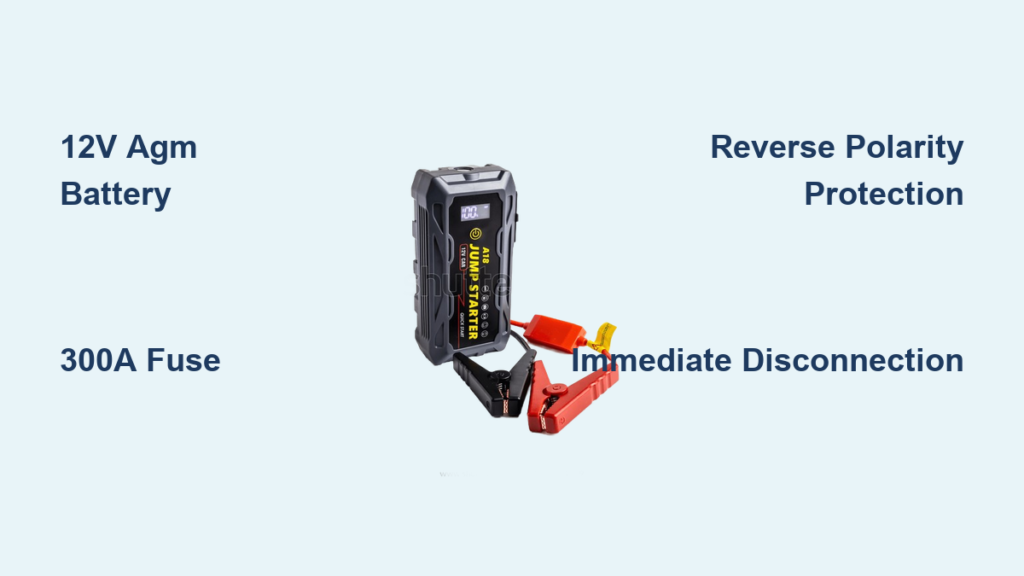
• Reverse polarity protection: prevents damage if clamps connect the wrong way
• Over-voltage protection: shields your car’s electronics from voltage spikes
• Over-current protection: limits excessive current flow and overheating
• Short-circuit protection: shuts down automatically if a short is detected
• Over-temperature protection: keeps the unit safe during repeated use
• Spark-proof design: eliminates dangerous sparking during connection
Why These Features Protect Everyone
These safeguards protect your vehicle’s battery, the jump starter itself, and you. They’re especially valuable if you’re not technically experienced. Expert Note: Learn the correct clamp connection order from the manual, but let built-in protections act as your backup.
Rapid Recharge Technology: Skip the Wait
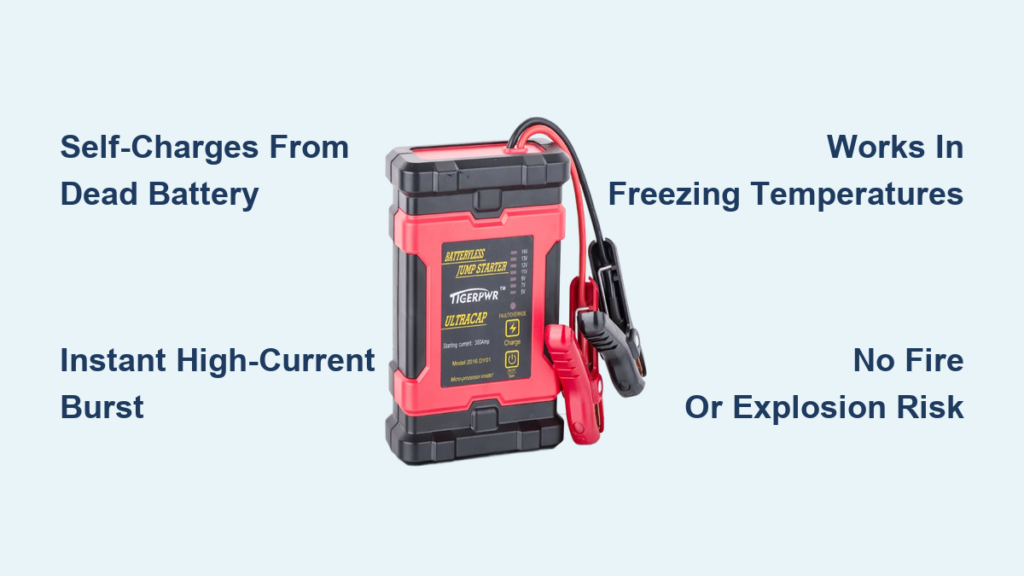
Some jump starters now recharge themselves during the jump-start process, eliminating downtime entirely.
How Rapid Recharge Technology (RRT) Works
- Jump-start your vehicle as normal
- Leave the jumper cables connected for 40 seconds after the engine starts
- The unit recharges fully to its pre-use state, ready for the next emergency
Who Benefits Most
RRT means no waiting, no charging cables, and no hassle. It’s ideal for roadside service teams, fleet operators, or anyone who might jump several vehicles in one day.
Auxiliary Features Worth Considering
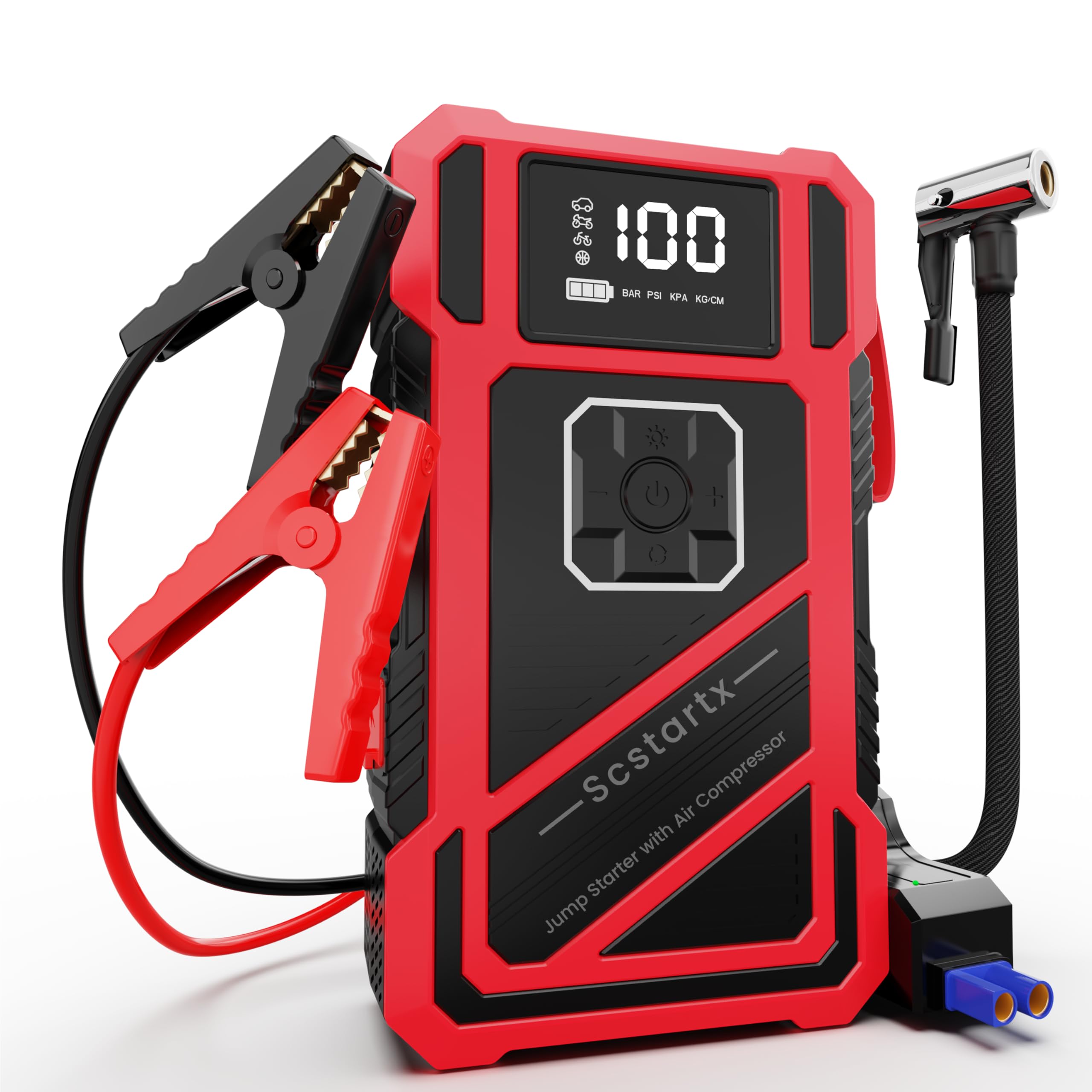
Extra features don’t affect jump-starting ability, but they turn the unit into a complete emergency toolkit.
Built-in LED Flashlight
• Essential for nighttime breakdowns and dark engine bays
• Look for bright LED torches with multiple modes
• Valuable for camping, road trips, and remote travel
USB Charging Ports
• Charge phones, GPS units, and tablets during a breakdown
• Multiple ports allow simultaneous charging
• Effectively gives you a built-in power bank
Air Compressor
• Inflates a flat tire on the spot
• Adds real value as a 2-in-1 or 3-in-1 emergency tool
• Increases size and cost, so weigh it against your travel habits
LED Battery Indicators
• Display remaining charge and operational status at a glance
• Help you know exactly when a recharge is due
Portability, Storage, and Everyday Practicality
A jump starter only helps if you can reach it quickly and it still works after months in storage.
Choosing the Right Size
• Compact models: fit easily in a glove box or trunk, ideal for small vehicles
• Heavy-duty units: more powerful but bulkier
• Balance power against your available storage space
Storage Best Practices
• Keep it in a cool, dry place away from direct sunlight
• Avoid extreme heat, cold, and humidity
• Check the charge level periodically during long-term storage
Pro Tip: Professional users should consider a docking station for set-and-forget operation. Plug it in, use it, return it, and it’s always charged.
Match the Model to Your Driving Lifestyle
Your usage pattern should drive your final decision more than any spec sheet.
Occasional Users
If you rarely face flat batteries and drive a reliable vehicle, a compact or mid-size model is sufficient and cost-effective.
Daily and Professional Users
Mechanics, dealerships, and fleet drivers need units built for endurance. Look for high capacity, docking stations, and construction that survives workshop conditions.
Off-Grid and Adventure Drivers
Campers and remote travelers should prioritize multi-function units with power bank capability, an LED torch, and capacity for extended trips without external power.
Recharging and Maintenance Routines
A jump starter is useless if it’s flat when you need it. Build these habits:
• Recharge every unit before winter and before long trips
• Test at least once a year, ideally during a routine vehicle maintenance check
• Verify charge levels periodically during long-term storage
Warning: Never assume your jump starter is ready. A dead unit is worse than having none at all.
Build Quality, Warranty, and Brand Reputation
Durability separates units that last years from those that fail on the first hard day.
What Quality Looks Like
Choose units built from durable materials that survive drops and harsh environments. Professional-grade models should handle daily workshop use without complaint.
Warranty and Brand Signals
• A 2 to 5 year warranty signals manufacturer confidence
• Short or missing warranties are a red flag
• Established brands offer better customer support and easier returns
Trusted Brand Names
Reputable names in this market include NOCO, Jump-N-Carry, Aten, DBPOWER, and IntelliStart (known for Rapid Recharge Technology). Avoid unknown brands with inflated specs and no clear warranty information. Buying from trusted retailers adds another layer of purchase protection.
Five Buying Mistakes to Avoid
Even experienced shoppers make these errors:
- Trusting peak amps alone: always compare cranking amps and CCA instead
- Skipping safety features to save money: reverse polarity protection is mandatory
- Choosing insufficient capacity: a 12Ah unit may fail on a large engine
- Buying unknown brands: no warranty support means no recourse if it fails
- Never testing the unit: an untested, uncharged jump starter fails when you need it most
Final Recommendations by Driver Type
Most Drivers: Choose a Mid-Size Model
A mid-size unit covers about 90% of vehicles on the road, includes essential extras, and balances power, portability, and price. It suits most passenger vehicles perfectly.
Professionals: Go Heavy-Duty
Professional-grade models handle multiple daily jump starts, include docking stations for automatic recharging, and cover the widest range of vehicles.
Small Vehicle Owners: Stay Compact
Compact models offer portability and value. They handle motorcycles, compact cars, and small engines easily, and store in tight spaces.
Frequently Asked Questions About Choosing a Car Battery Jump Starter
How many cranking amps do I need for a standard car?
Most standard vehicles need at least 1000 CCA. Trucks and diesel engines require 2000 CCA or higher to start reliably, especially in cold weather.
Are peak amps more important than cranking amps?
No. Peak amps describe a split-second burst that drops with each attempt. Cranking amps measure sustained output during actual engine turnover, making them the more reliable indicator.
What battery capacity should a jump starter have?
Aim for at least 20,000 mAh (20Ah) for most vehicles. Smaller 12Ah units suit small engines but may struggle with larger petrol or diesel motors.
How often should I recharge my jump starter?
Recharge it before winter and before long trips, and test it at least once a year. Units slowly lose charge in storage, so verify levels periodically.
What safety features are essential?
Look for reverse polarity, over-voltage, over-current, short-circuit, and over-temperature protection, plus a spark-proof design. These protect you, your vehicle, and the device itself.
What is Rapid Recharge Technology?
After starting your engine, leave the cables connected for 40 seconds. The unit recharges itself fully to its pre-use state, ready for the next jump with no wall outlet required.
Key Takeaways for Choosing Your Car Battery Jump Starter
Choosing the right car battery jump starter comes down to three priorities. First, match cranking amps and CCA to your engine size, since diesel engines need significantly more power than petrol. Second, insist on full safety protections, especially reverse polarity and spark-proof design. Third, buy from a reputable brand with a solid 2 to 5 year warranty.
Before you buy, run through this quick checklist:
• Cranking amps and CCA match your engine requirements
• Capacity of 20,000 mAh or more for most vehicles
• Complete safety protection suite included
• LED torch and USB ports for emergency versatility
• Trusted brand with strong warranty and reviews
Your next step is simple: check your engine size and battery’s CCA spec today, then shortlist models that meet or exceed those numbers. Test your new jump starter once it arrives, and you’ll never face a dead battery unprepared again.